
How Are Kidney
Masses Treated?

How Are Kidney Masses Treated?

Knowing your treatment options

Learning about what treatments exist could help you ask better questions and make a plan with your care team that you feel comfortable with—whether that means careful monitoring or taking action.

Making an informed decision with your care team might help you:

  • Feel confident with your decision
  • Lower the chance of having a procedure you may not need
  • Keep as much kidney function as possible, if treatment is needed

When choosing a treatment option with your doctor, it’s important to remember:

  • Some masses are not cancer and might not need treatment at all
  • Some masses grow slowly and may be watched safely
  • Some masses may be more serious and require intervention

4 in 10 masses less than 4 cm are not cancer.
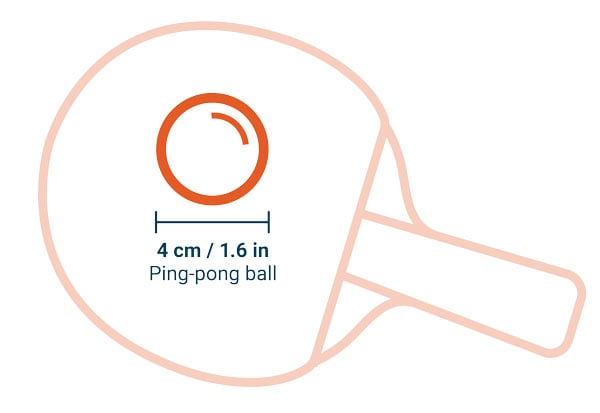
A ping-pong ball is about 4 centimeters or 1.6 inches big

Methods used to treat kidney masses

Active Surveillance

What it is

Body scans monitor the kidney mass for signs of change every few months

Pros

  • No surgery
  • Few side effects

Cons

  • Requires many body scans
  • Mass could grow
  • Cancer could be missed
  • May feel anxious about not knowing if mass is cancer
Not a complete list.

Ablation

What it is

Surgery using a needle that heats or freezes the mass to kill it

Pros

  • Small surgical cut
  • Short recovery time (1 to 2 weeks)
  • Keeps more kidney function than removing the whole kidney

Cons

  • May not be an option for larger masses
  • Mass could return and may require multiple surgeries
Not a complete list.

Partial Nephrectomy

(par-shul nuh-frek-tuh-me)

What it is

Surgery to remove only the kidney mass and some of the surrounding healthy tissue (called a “margin”)

Pros

  • Keeps more kidney function than removing the whole kidney
  • May fully remove the tumor

Cons

  • More complex surgery than removing the whole kidney
  • Long recovery time (4 to 6 weeks)
  • Some risk of the mass returning near where it was removed
Not a complete list.

Radical Nephrectomy

(ra-dih-kul nuh-frek-tuh-me)

What it is

Surgery to remove the whole kidney

Pros

  • Simpler operation than partial nephrectomy
  • Very low chance of any of the mass being left behind

Cons

  • Lose a whole kidney
  • Longest recovery time (6 to 12 weeks)
  • Can lower long-term kidney function
Not a complete list.

Talking with your doctor about your options

If you know what kind of kidney mass you have, you and your care team can work together to select an appropriate care plan. This is why it can be helpful to ask questions.
Some questions you may want to ask are: 1. What options are available to diagnose my type of kidney mass? 2. What are the risks and benefits of each diagnostic option? 3. What else do I need to know in order to talk about my treatment options?

A new, noninvasive way to find the most common kidney cancer may help more people

EXPLORE THIS NEW IMAGING OPTION